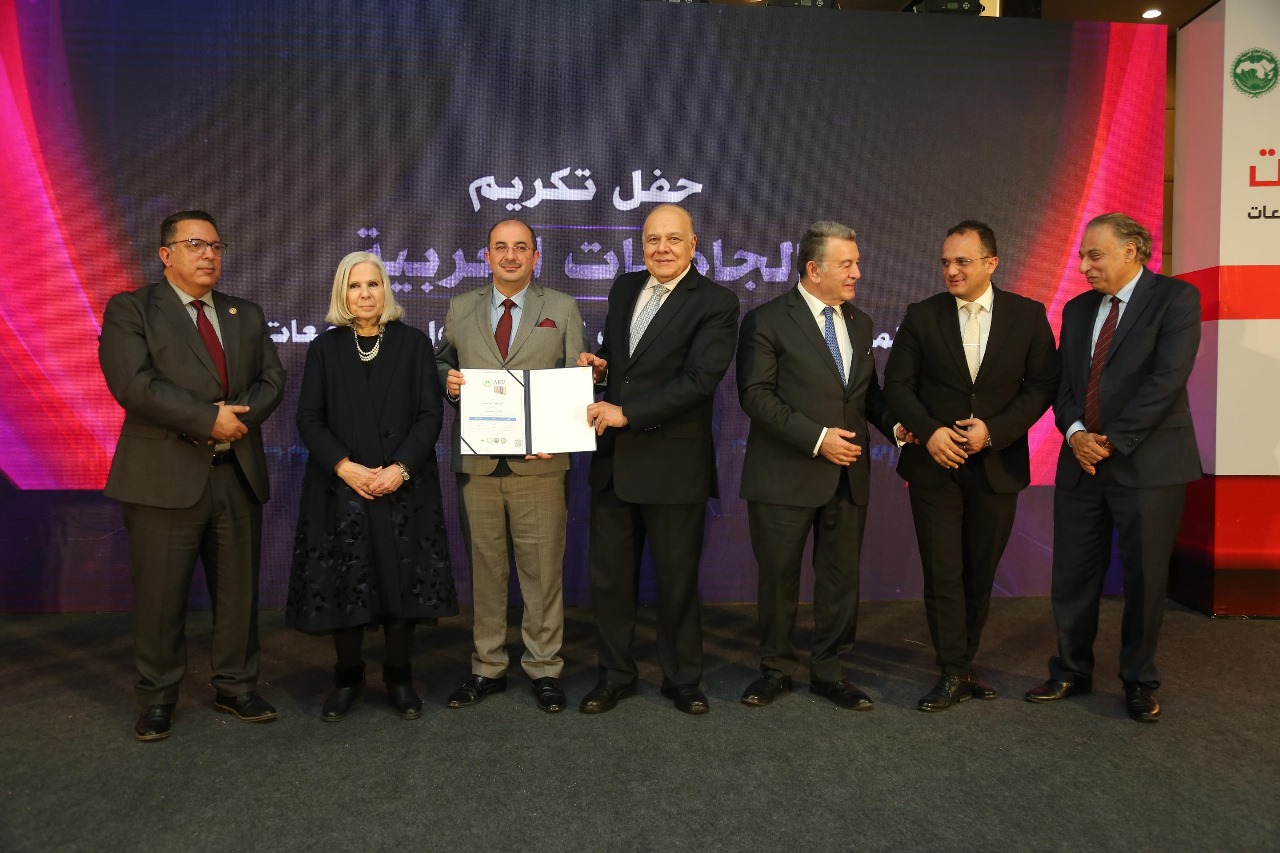

The Arab University Rankings was designed using a methodology based on four main criterion aligned with the vision and needs of Arab countries. Each criterion is measured through nine specific indicators. These include: teaching and learning, focusing on the quality of education; scientific research, evaluating the quantity and quality of research output; creativity, entrepreneurship, and innovation, adding an economic dimension by encouraging innovation-based research in universities; and the promotion of marketing, dissemination of scientific outputs, and technology management to support the development of a knowledge-based economy.
METHODOLOGY
Education and Learning (Quality of Teaching) (300 points)
| Indicator | Weight |
| Indicator 1: Ratio of faculty members (FTE) to the total number of students (Head Count) during the ranking year | 80 |
| Indicator 2: Ratio of faculty members (FTE) holding a PhD degree to the number of students (Head Count) during the ranking year | 30 |
| Indicator 3: Rate of utilization of digital platforms and artificial intelligence tools in teaching | 20 |
| Indicator 4: Number of interdisciplinary academic programs that integrate two or more scientific disciplines, through which the university grants academic degrees in multidisciplinary, interdisciplinary, or transdisciplinary fields | 20 |
| Indicator 5: Number of faculty members (Head Count) with an H-index of at least 10 in the Scopus database | 60 |
| Indicator 6: Number of experts fully or partially seconded to teach theoretical or practical courses, supervise theses from outside the university (excluding medical doctors’ training in hospitals), or participate in providing scientific consultancy to end beneficiaries, provided that they hold at least a bachelor’s degree, during the ranking year | 15 |
| Indicator 7: Number of regional or international programmatic accreditations during the ranking year | 30 |
| Indicator 8: Number of scientific research papers published in internationally indexed journals, provided that undergraduate students participated in the research and their names are listed among the authors, during the ranking year, with the research link provided | 30 |
| Indicator 9: Number of recipients of prestigious scientific and academic awards with international or Arab relevance (see the list) | 15 |
| Total : | 300 |
Scientific Research (400 points)
| Indicator | Weight |
| Indicator 1: Number of scientific research publications indexed in Scopus during the last five years | 100 |
| Indicator 2: Number of the university’s research publications published in Q1 and Q2 journals out of the total Scopus-indexed output during the last five years | 50 |
| Indicator 3: Average citations per Scopus-indexed research paper during the last six years | 50 |
| Indicator 4: Percentage of the university’s research publications ranked among the top 10% most cited globally during the last six years | 40 |
| Indicator 5: Number of scientific research publications indexed in Scopus and co-authored with international universities during the last five years | 40 |
| Indicator 6: Number of scientific research publications indexed in Scopus and co-authored with non-academic institutions during the last five years | 25 |
| Indicator 7: Field-Weighted Citation Impact (FWCI) across all university disciplines according to Scopus during the last five years | 40 |
| Indicator 8: Percentage of the approved research budget out of the university’s total budget during the ranking year | 30 |
| Indicator 9: Number of scientific research papers published in Arabic and indexed in ARCI/EKB/Arcif Clarivate and classified within Q1/Q2 during the last five years | 25 |
| Total | 400 |
Creativity, Entrepreneurship, and Innovation (150 points)
| Indicator | Weight |
| Indicator 1: Number of Scopus-indexed research publications related to industry, innovation, and infrastructure (SDG 9) out of the university’s total research output during the last five years | 50 |
| Indicator 2: Percentage of Scopus-indexed SDG 9 research publications published in Q1 and Q2 journals out of the total SDG 9 research output during the last five years | 50 |
| Indicator 3: Number of funded research projects in the field of development and innovation conducted in collaboration with beneficiary entities during the last five years | 5 |
| Indicator 4: Number of documented activities and events organized by the university in the fields of creativity, entrepreneurship, innovation, and technology transfer during the ranking year | 5 |
| Indicator 5: Number of active and consultancy contracts concluded between the university, its incubators, or technology transfer offices on one side, and industry, research institutions, or beneficiary entities on the other side, for the purpose of developing or manufacturing a product during the ranking year | 5 |
| Indicator 6: Availability of an Innovation and Entrepreneurship Center or supporting units such as business incubators, accelerators, technology transfer offices, or similar entities within the university | 5 |
| Indicator 7: Number of patents citing the university’s published research outputs (Patents Count) during the last five years | 15 |
| Indicator 8: Average number of patent citations received per 1,000 scholarly publications from the university (Patent Citations per Scholarly Output) during the last five years | 10 |
| Indicator 9: Number of startup and spin-off companies emerging from the university’s technology and business incubators | 5 |
| Total | 150 |
International and Local Collaboration and Community Service (150 points)
| Indicator | Weight |
| Indicator 1: Number of international faculty members appointed, contracted, or physically participating in teaching for a full academic year or its equivalent | 30 |
| Indicator 2: Number of visiting professors from other countries who made a documented academic or research contribution during the ranking year, such as teaching, research supervision, lectures, training, academic consultancy, or joint research | 10 |
| Indicator 3: Number of international students enrolled for study during the ranking year | 30 |
| Indicator 4: Number of active academic programs offering joint or dual degrees with globally ranked universities, including the university’s international branch programs or branches hosted within the university | 20 |
| Indicator 5: Number of documented international conferences, forums, and training programs organized by the university during the ranking year | 20 |
| Indicator 6: Number of faculty members who participated in documented local or international academic exchange programs during the ranking year | 10 |
| Indicator 7: Number of students participating in local or international academic exchange programs, whether incoming to or outgoing from the university, relative to the total number of students during the ranking year | 10 |
| Indicator 8: Number of documented community engagement activities organized by the university to serve the community outside the campus during the ranking year | 10 |
| Indicator 9: Provision of the university’s educational and research resources, activities, and facilities to non-university affiliates, industry, and beneficiary entities (Open Science) | 10 |
| Total | 150 |